- Precision in Electrochemistry
- English
Short stack FC
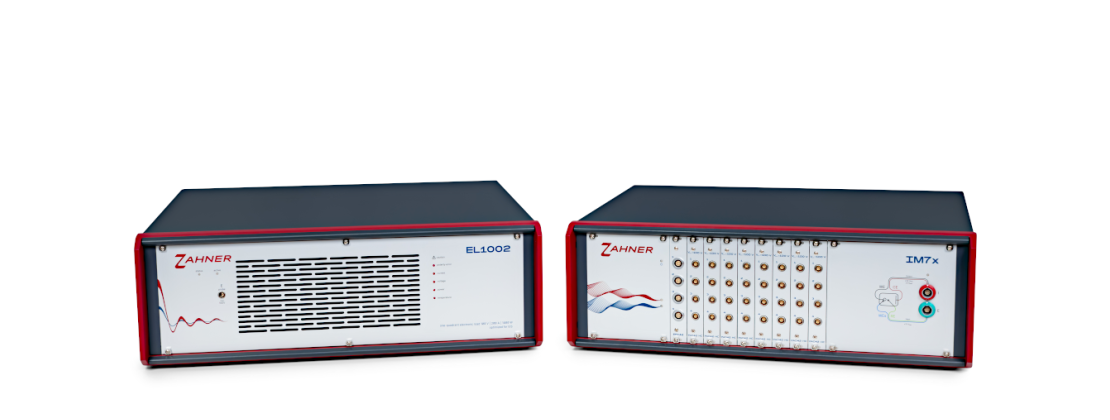
The EIS-capable EL1002 provides a flexible 1kW solution for short-stack fuel cell characterization. The EL1002 supports operation with currents up to 200 A or voltages up to 100 V.
The unique EXT+ connection of the EL1002 allows high sinking currents of up to 680 A, by connecting an additional electronic load. This extended system enables EIS measurements up to 1 kW and DC operation up to 68 kW at voltages up to 100 V.
Synchronous per-cell measurement shows which individual cells limit performance. It also reveals how flooding, drying, and catalyst degradation develop across the stack, which a single terminal-voltage reading cannot provide.
Optional PAD42 card extensions enable synchronous measurements on individual cells within a stack, half-cell characterization, and cross-sectional analysis, allowing more detailed evaluation of fuel cell stacks.
The system can be controlled either through Zahner Lab software or integrated into automated setups via C++, Python, or WebSockets.
The EL1002 is used as an extension of an IM7 or IM7x potentiostat.
Technical specifications
In-depth fuel cell stack analysis
The PAD42 cards in the IM7 or IM7x can be used together with EL1002 to perform synchronous measurements for in-depth analysis of the fuel cell stacks.
Stack-level analysis
The PAD42 cards allow synchronous EIS or DC measurements on each cell in a stack. With eight PAD42 cards, up to 33 synchronous measurements can be carried out on individual cells in a stack.
Learn more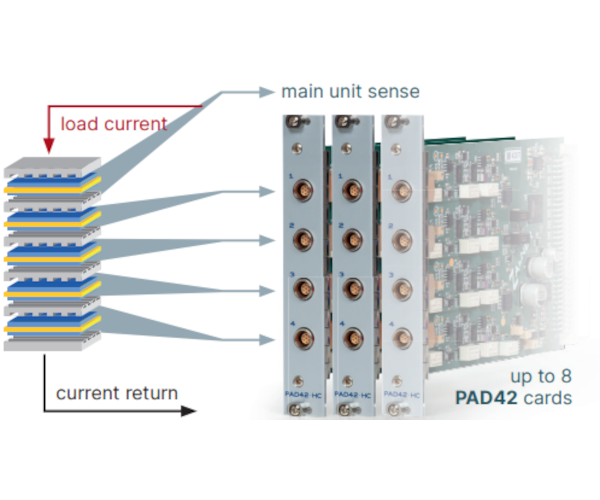
Half-cell analysis
The PAD42 cards in the IM7 or IM7x can be used to perform synchronous measurements at each electrode in a reference electrode setup.
Learn more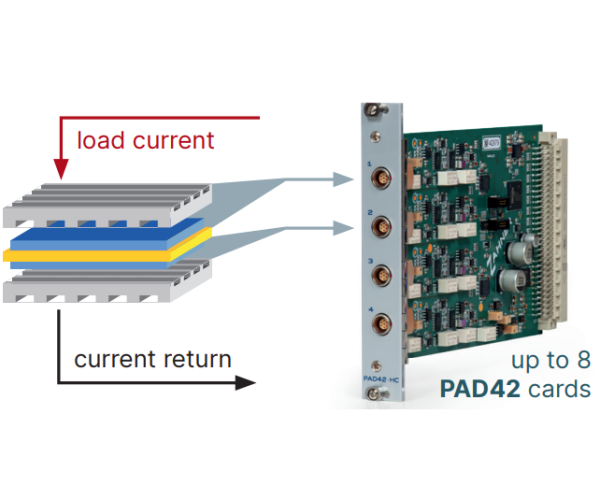
Electrode-level analysis
The PAD42 cards (with segmented shunts) enables cross-sectional analysis of the cell.
Learn more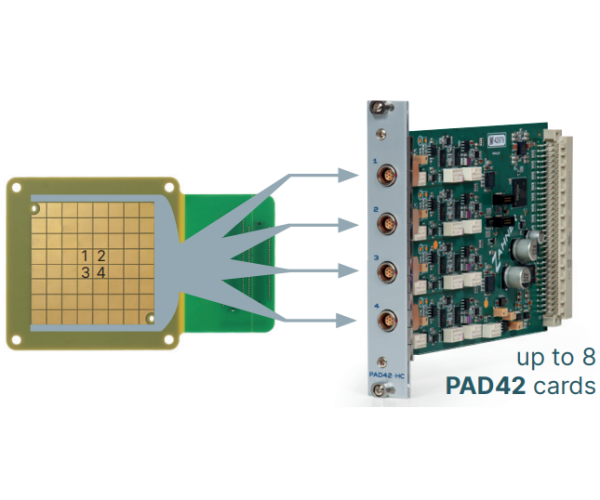
Request a quote
Is this the right product for you? Contact our sales team to get further information about our products and their suitability to your individual applications.
Contact Sales