
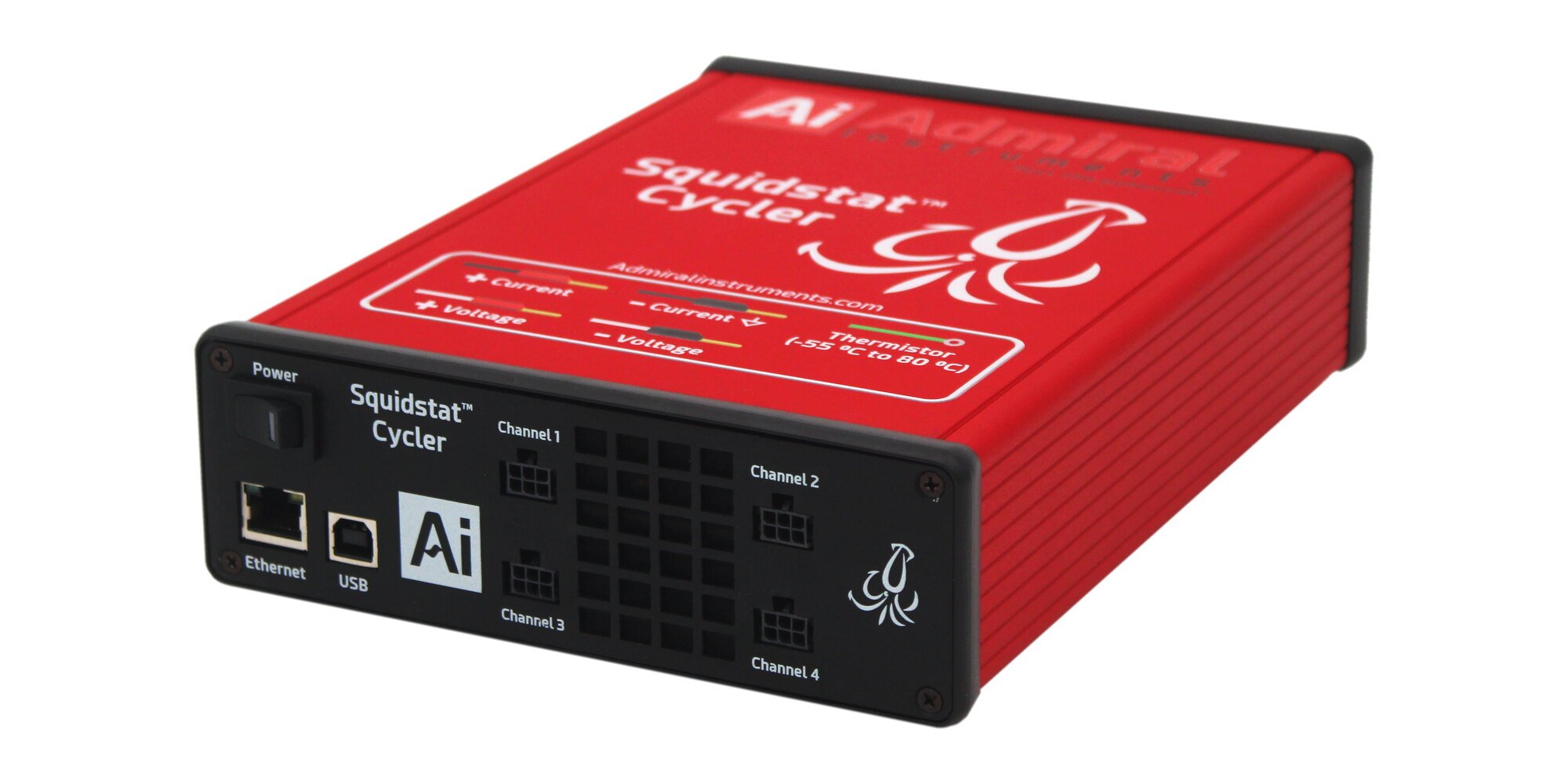
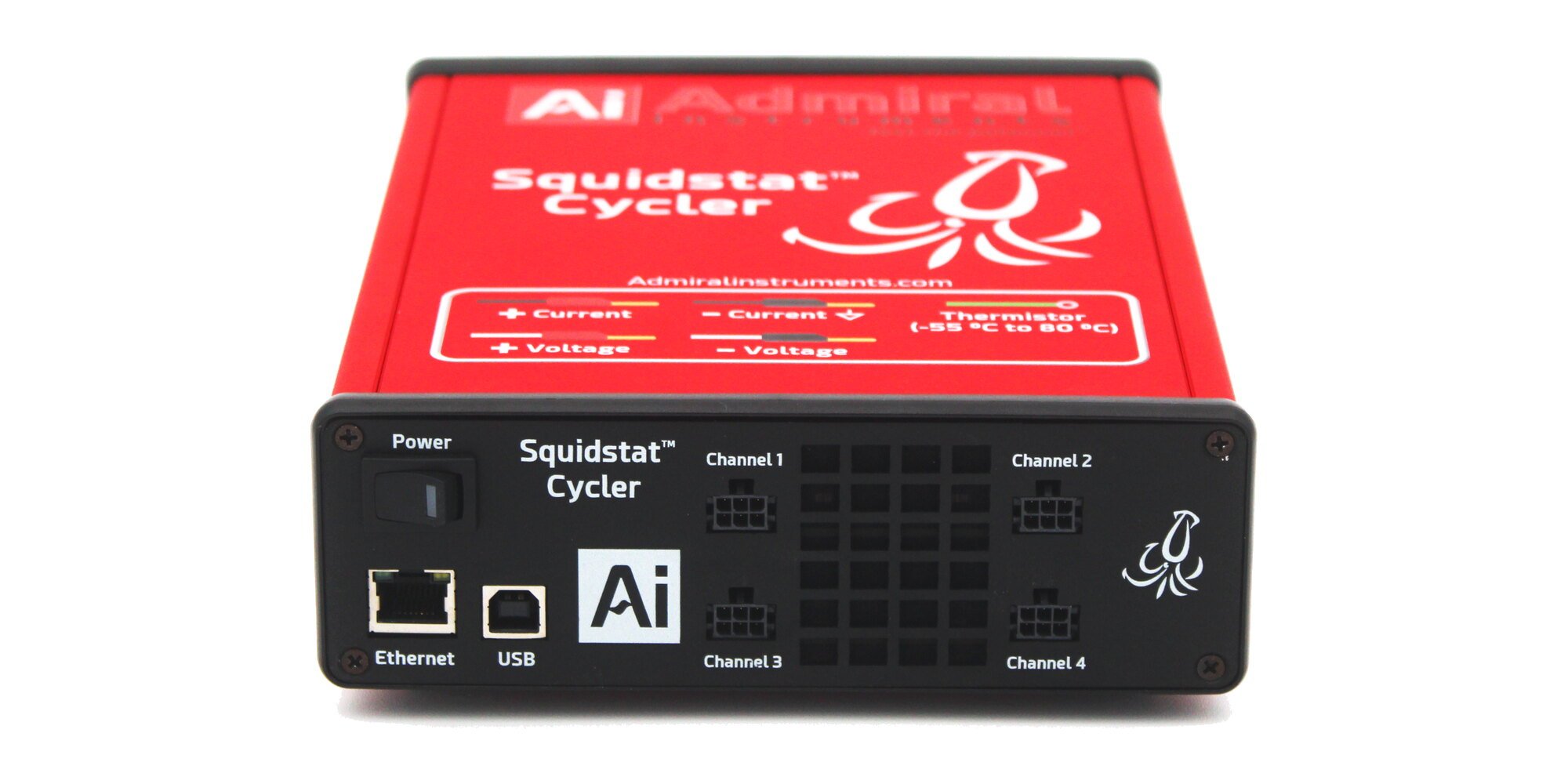
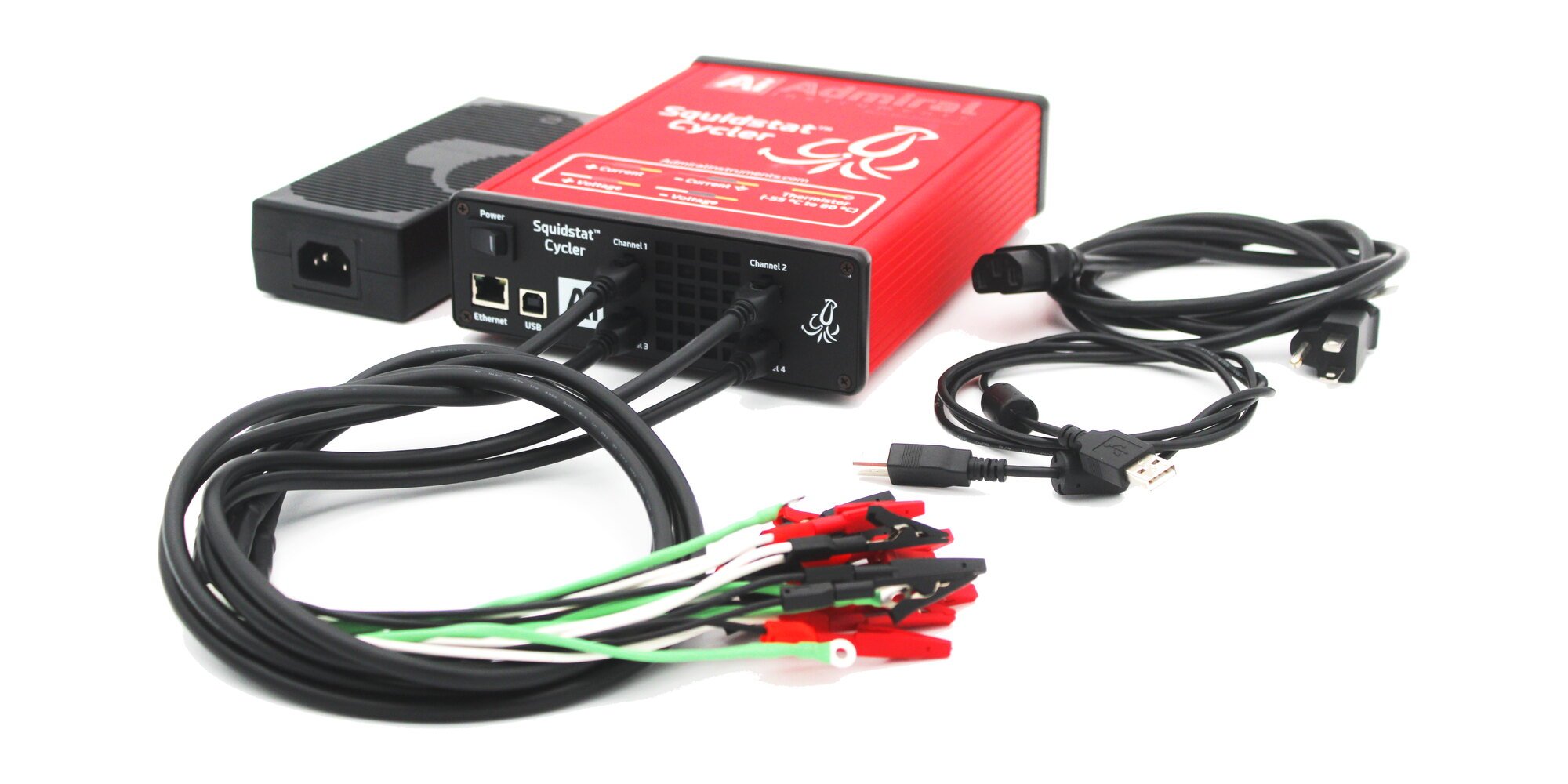
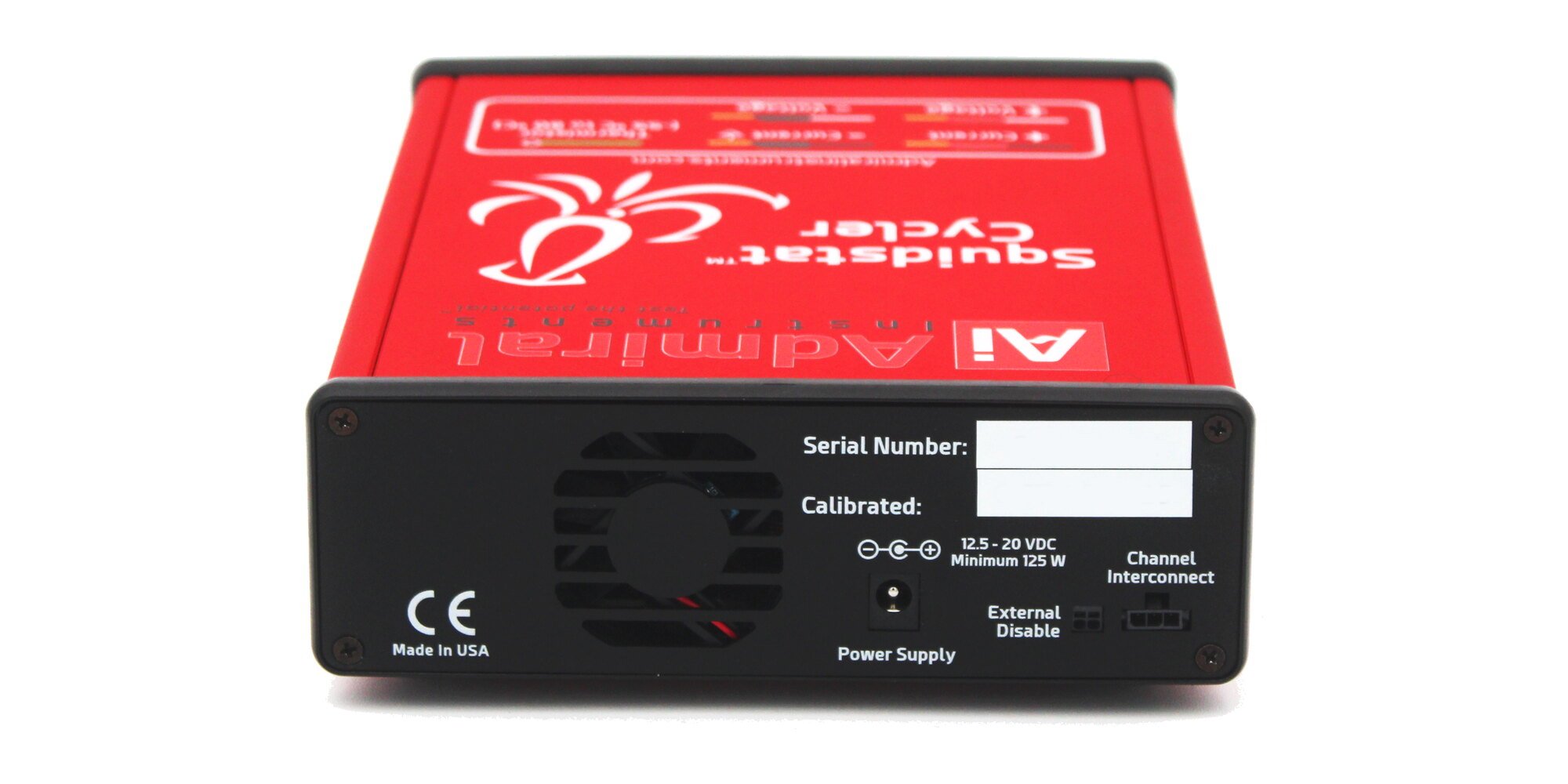
The Squidstat Cycler Base Model is a four-channel battery cycler with a frequency response analyzer (FRA), built to go beyond conventional charge and discharge tests. It suits high-current research, development and teaching that need flexible electrochemical control: every channel works as a potentiostat or galvanostat with currents up to ±5 A in two current ranges (5 A and 500 mA), a voltage scan range of 0 to 5 V and electrochemical impedance spectroscopy (EIS) from 10 µHz to 10 kHz. Besides batteries, it serves fuel cells, electrolyzers, supercapacitors, solar cells and electrocatalysis.
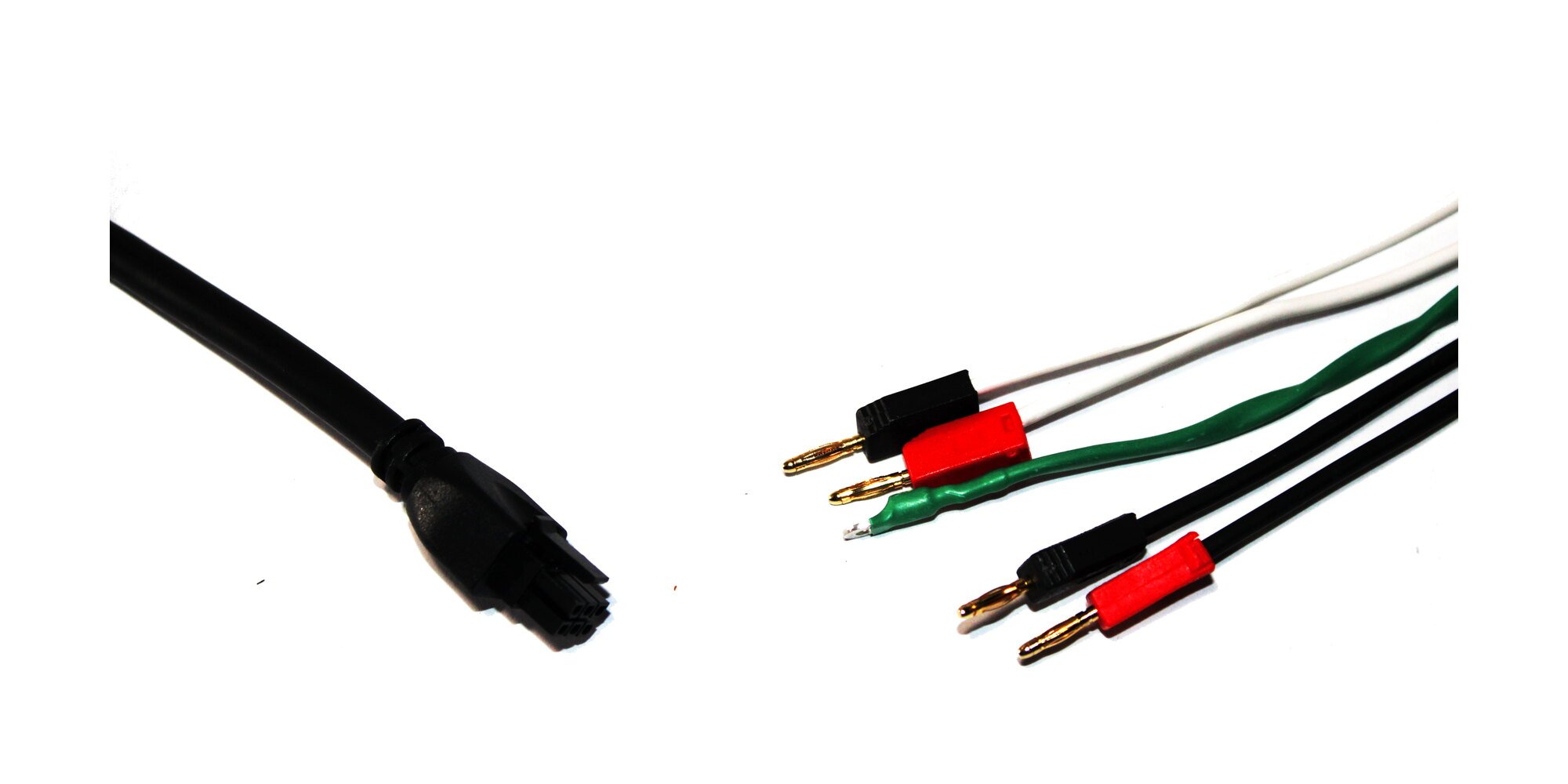
Channels can be combined: connected in parallel, they add up their currents, up to ±20 A with all four channels; two adjacent channels paired for bipolar operation also reach negative voltages (±5 V). Each channel has its own thermistor lead (−55 to 80 °C, ±1.25 °C), so the cell temperature is recorded together with the measurement.
Its current accuracy (0.1 % of range ±250 µA in the 500 mA range) suits batteries of every type and fuel cells, but not precise low-current measurements such as coin cells: for these, the Squidstat potentiostats are the better choice.
The Squidstat User Interface software for Windows, macOS and Ubuntu and an application programming interface (API) control the cycler. Several Squidstats, cyclers and potentiostats alike, run at the same time on one computer.
Made by Admiral Instruments. The Squidstat Cycler Base Model is built in the USA by our partner company Admiral Instruments (Tempe, Arizona); Zahner sells it as a distributor. More about it: Squidstat Cycler Base Model at Admiral Instruments (English).